
Fearlessly and Colorfully Made
Why Dates Matter
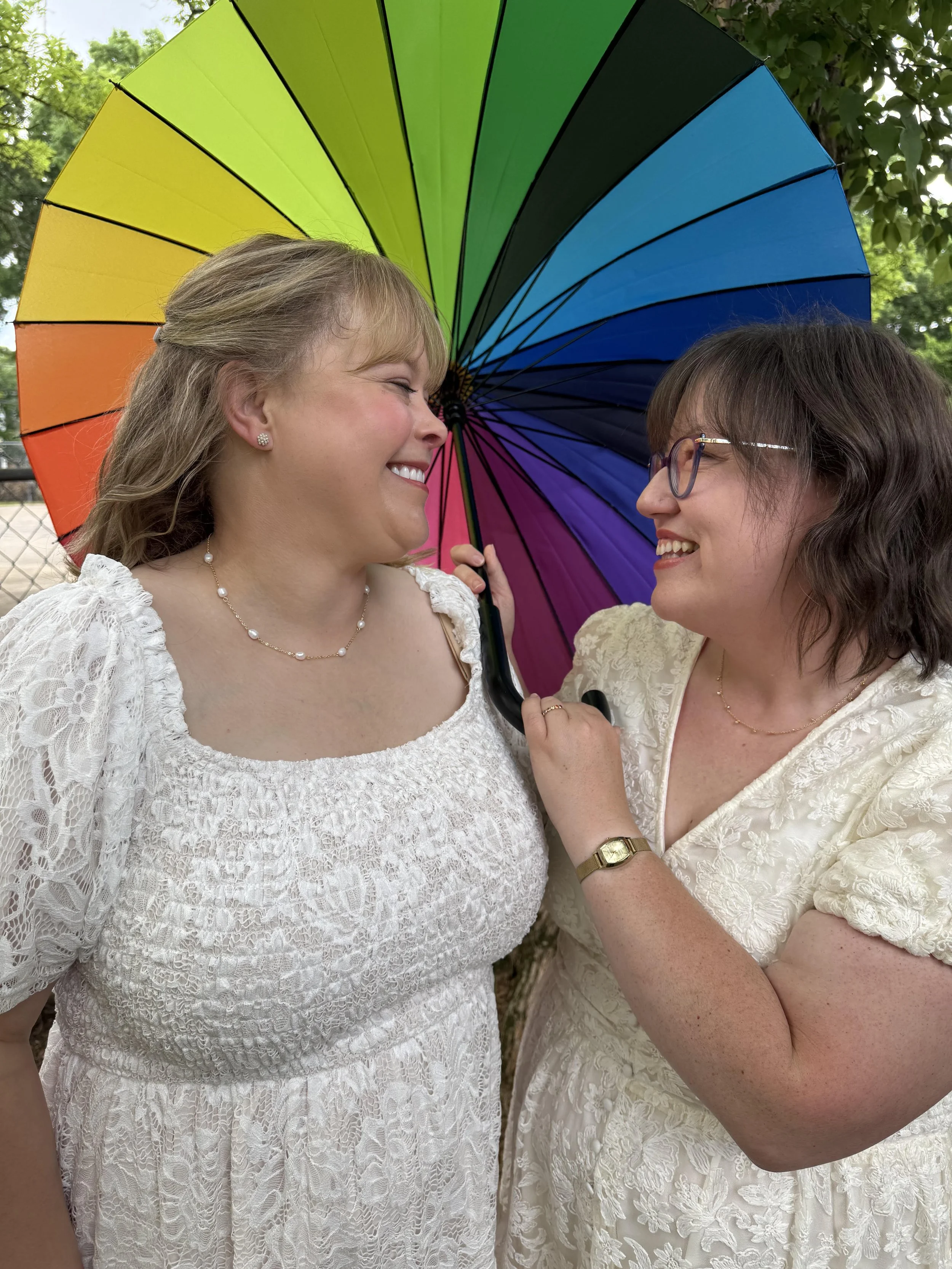
Happy National Coming Out Day, Edgehill! As I researched the history of this day of recognition, I learned that the first National Coming Out Day was observed on October 11, 1988, inaugurated by psychologist Robert Eichberg, who would later die in 1995 due to complications of AIDS, and Jean O’Leary, an openly lesbian politician from New York and head of the National Gay Rights Advocates in Los Angeles. The date of October 11th was chosen to celebrate the one year anniversary of the 1987 March on Washington for Gay and Lesbian Rights, of which over 500,000 people participated.
While writing this message to share with you today, I kept coming back to this phrase in my mind, “dates are important.” As I think about important dates, I am struck by the reality that at 38 years old, I enjoy the privileges and benefits of the hard work of so many queer people that came before me. I was born in 1988, therefore there has never been a year of my life that National Coming Out Day has not existed.
That kind of progress is humbling and emotional for me to process. I recognize that there are many things that I take for granted every day, but I can confidently say that never a day goes by that I am not grateful for the powerful, faith-filled work that my Edgehill elders have put into the reconciling movement for LGBTQ people.
Edgehill’s Long History of LGBTQ+ Advocacy
Dates are important, and since we have so many new faces joining us on Sunday mornings, I want to share some of the beautiful history of Edgehill’s activism for queer people, dating back to the 1970’s. In 1971, Edgehill provided a worship space for the Metropolitan Community Church - a group of queer Christians - when no other church would do so.
The MCC went on to get their own building, but when it was destroyed in an arson attack, Edgehill opened their doors to the group again. This was a crucial point in Edgehill’s history and relationship to queer people, and this branch of activism began to weave it’s way into the church’s DNA through this relationship with the MCC.
This reconciling work done in the 70’s paved the way for the creation of the Reconciling Ministries Network in 1984, of which our very own Rev. Beth Richardson was a co-founder. Present day, the Reconciling Ministries Network is a huge organization that now includes 1,463 Methodist churches and over 46,000 reconciling Methodists. And it all started here, at Edgehill.
Showing Up During the HIV/AIDS Crisis
Edgehill’s work for LGBTQ people continued in the 1980s and 90s. I am going to quote the powerful story shared on the Edgehill website, because I couldn’t have said it better myself,
“We hosted support groups and prayer services for people living with HIV/AIDS, as well as for their families, caregivers, and partners—many of whom had been rejected by their own churches and families. Our building became a place where people could grieve without shame, find community without judgment, and be reminded that they were not alone.
Members of our congregation visited hospital rooms, sat at bedsides, and held memorials, and literally turned their homes into hospice care for people dying from HIV/AIDS. We worked with local organizations to provide meals, transportation to doctor’s appointments, and emotional support. Volunteers from Edgehill quietly but faithfully showed up—to advocate, to listen, to pray, to remember.
In a decade when HIV/AIDS was still widely misunderstood and stigmatized—particularly in the South—we affirmed that every person living with HIV/AIDS was beloved by God; that they deserved to be treated with dignity and companionship, and that to follow Jesus meant standing with the sick, the suffering, and the abandoned.”
So, I say to the newest members of Edgehill and especially the young adults and queer people in this room - we stand on the backs of giants in the LGBTQ activism community. I am in awe of the work our Edgehill saints have done, and I want every young or new person here to connect with an original member of the church and glean as much history, stories, and wisdom as you can from them. They are a resource of immeasurable value, and a treasure.
The Sunday I Found Edgehill
Dates are important markers in life, and we all have dates that stand out on our calendars for any number of personal reasons. Sunday, March 5, 2017 is the first day Laura and I visited Edgehill UMC. I know that it was meant by God for Laura and I to visit on that particular Sunday, because it was a particularly magical Sunday, and what I like to say when sharing this experience with others is that every character in our congregation was the richest version of themself that day.
As I stepped over the threshold of the double red doors, a deep, holy sense of knowing filled my body - I instantly knew I was home. Margaret Howell greeted Laura and I, and she was the perfect balance of kindness and warmth. During the choir anthem, Mauni stood in the front and danced back and forth while singing with the brightest smile on her face, and I thought, “I want to sing with her!”
During prayer concerns, Rowland stood up and asked for folks to join him at a peaceful protest during the president’s upcoming visit at Nissan Stadium. Ed stood up next which a prayer concern, promptly became frustrated with his teeth, and popped them out so he could speak with more ease.
Margaret announced the United Methodist Women were meeting to discuss their experiences at the Women’s March, and invited everyone to wear their “pink hats.” And Rev. John topped off the experience with a sermon about the imaginary, man-made borders that keep us separated from our immigrant siblings; how this is not a part of God’s plan for us.
When I thought I couldn’t possibly handle any more love and inclusivity, I found a place in the communion circle between Ed and Louise. After receiving communion and singing all of the communion songs, both Ed and Louise turned to me simultaneously and said, “You should join the choir!” I was overcome with the instant sense of welcome and family that I found at Edgehill. I believe I joined the choir about 2 weeks later.
Looking for a Church Where I Could Be Fully Myself
I found Edgehill at the recommendation of my therapist who was helping me in my coming out process. I wanted to find a community where my sexuality would not just be tolerated or accepted, but valued and celebrated. My therapist knew (and I believe participated in) some of the history of the church that I cited earlier, and she described Edgehill as being “radically inclusive, with a strong focus on activism.” After the results of the 2016 election, activism was an important quality I was looking for in my community.
My only regret in coming to Edgehill is that I didn’t find you all sooner. However, as I look back on my process of coming out to myself, I don’t think I was ready for Edgehill until about 10 years ago. I had a lifetime of internalized homophobia to overcome, driven and reinforced by my evangelical upbringing. Edgehill is the place I learned to come out, to love myself, and realize that I am not only a normal human being, but I am beautifully made, intentionally just as I am, by God.
Fearfully and Wonderfully Made
Verse 14 of Psalm 139 from our reading says, “I praise you because I am fearfully and wonderfully made.” In my young adult years, I would have never praised God for my sexuality or believed I was “wonderfully made.”
My hidden sexuality was a part of the “double life” I led for too many years - attending my conservative, traditional Baptist church where I also sang in the choir, leading my college’s chapter of Baptist Collegiate Ministries as the co-president, all while hiding my relationship with my girlfriend from my family, most of my friends, and even to myself by way of denial.
In my early 20s, I emerged from my denial when I finally recognized that my pattern of exclusive attraction to women was not an isolated occurrence or “something to get out of my system.” In full self-identity panic mode, I read the wonderful book, “Torn” by Justin Lee. This book was life-changing for me in that it helped me to believe that I wouldn’t be going to hell when I died - a fear that plagued me to the point of hopelessness and depression.
The Healing I Found at Edgehill
What “Torn” did in pulling me from the edge of despair, Edgehill healed, rebuilt, and made beautiful. On the morning of our first visit to the church in 2017, a large group of young adult missionaries were visiting the church as well. A young woman around my age stood up during announcements and shared that she and her wife were married earlier that week. Steve Lindsey wasted no time in playing the first few piano chords of “Bless Their Lives” and the singing began. I was moved to tears that day, and I continue to be moved each time this song is sung at the church for any reason.
The thing about Edgehill is that we don’t just sing the words “bless their lives…” we are boots-on-the-ground loving and blessing all of God’s children in the ways that matter most. Edgehill’s love began healing me in 2017 and continues to heal me in real time, to this day. Today, I believe that I am fearlessly and colorfully made - because Edgehill is fearless and vibrant.
As a therapist, I am blessed to work in a progressive and diverse therapy practice in my otherwise conservative Wilson County. I've been able to help many LGBTQ people come out to themselves, their parents, family, and friends, in a full circle moment that is humbling when I really think about it.
As a therapist, I'm sought out specifically by queer people in search of a provider who they can relate to and feel safe with, and this is one of the greatest honors of my life's work thus far. I've led an LGBTQ teen therapy group for 8 years. I've marched in the Pride Parades and renewed my vows with my wife and partner of 16 years in front of my family, friends, and Edgehill family with so much confidence and peace in my soul, the 19 or 25 year old version of me would never believe it. I look forward to seeing how you'll help me grow in the future. I know I still have so much to learn.
“I Don’t Go to Church. I Go to Edgehill.”
In an interesting turn of events, coming out as a Christian, or the Edgehill version of a Christian-adjacent person in my daily life creates more mental friction for me now than coming out as a lesbian. I don't want to be associated with the judgmental, narrow minded, mainstream version of Christianity that we are presented with today. This is why I've been known to say, "I don't go to church. I go to Edgehill.” It's hard for me to summarize to others why I don't love the church as a whole, but I can't get enough of this place. You've helped to shape and mold me into the proud, queer woman I am today.
As verse 16 alludes to in our scripture reading, I think each of you knew me and saw my potential before I could perceive it in myself. Thank you for holding my hand, protecting my heart and walking this path of change with me.
Happy National Coming Out Day, Edgehill.